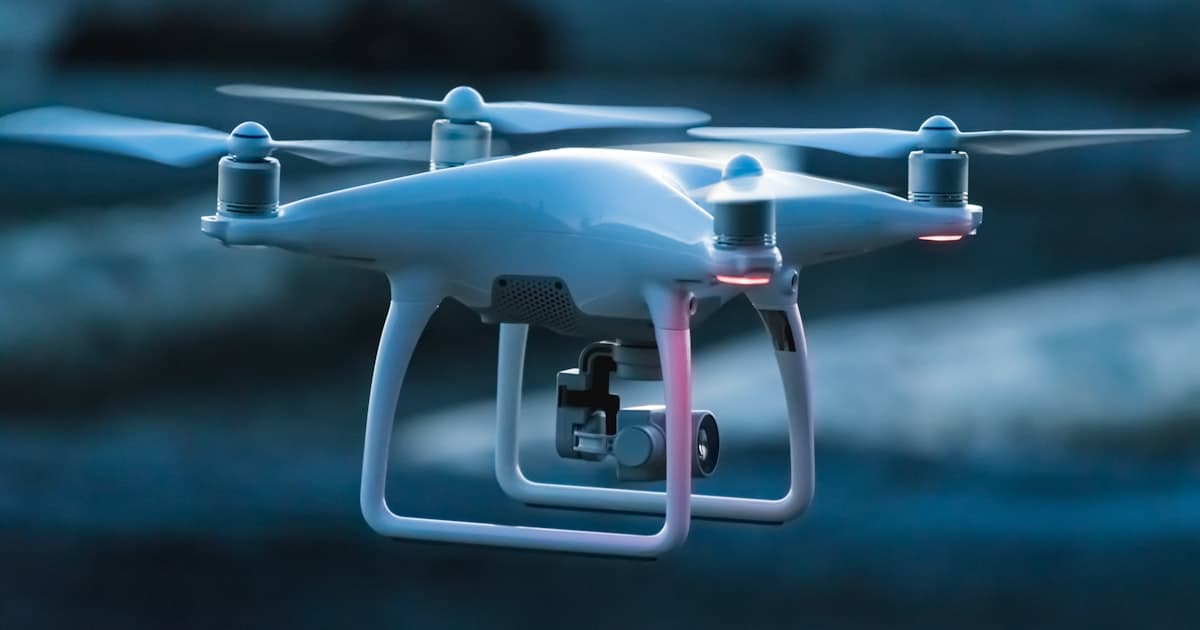
After years of breathless predictions and limited deployments, drone delivery in logistics has settled into a pattern of pragmatic, focused applications that solve real operational problems. The most successful implementations share three characteristics: they serve routes where ground transport is impractical or extremely slow, they carry payloads under five kilograms, and they operate in controlled environments where airspace integration is manageable.
Indonesia has emerged as an unlikely leader in drone logistics innovation, driven by its archipelagic geography. In the Riau Islands, a government-backed program uses long-range fixed-wing drones to deliver essential medicines and diagnostic samples between island health centers and the provincial hospital in Tanjungpinang. What was previously a six-hour boat journey is now a 40-minute drone flight, enabling same-day diagnosis for conditions that previously required patients to wait days or travel themselves. The program has expanded from a three-island pilot to a 15-island operational network.
Port logistics represents another promising application. The Maritime and Port Authority of Singapore has operationalized a drone delivery service between anchorage zones and shore-based service providers, delivering spare parts, documents, and crew supplies to vessels at anchorage without requiring launches. The service has reduced average delivery time from 45 minutes to 12 minutes and eliminated 2,500 launch trips annually, with corresponding reductions in fuel consumption and emissions.
The technology's limitations remain significant. Battery energy density constrains payload and range, limiting economically viable applications to lightweight, time-sensitive deliveries over distances under 80 kilometers. Weather sensitivity is a particular challenge in tropical climates, where afternoon thunderstorms can ground drone operations for hours. Regulatory frameworks, while improving, still require separate approvals for each operational route and have not established clear standards for beyond-visual-line-of-sight operations that would unlock longer-range applications.
Prof. Andi Wijaya
Research Fellow, Maritime Logistics
Professor Wijaya leads the Logistics and Supply Chain Research Center at Universitas Gadjah Mada, specializing in sustainable maritime transport systems.